
K53 road signs and their meanings
By The PassPath Team · Updated
Road signs are 28 of the 64 questions in the K53 learners test, and you may only get five of them wrong. Learning the groups first is worth more than learning the pictures: once you know what a group obliges you to do, a sign you have never seen still tells you something. Here are the groups, what each one means in law, and drawings of the signs a car learner meets.
Every drawing here was made for PassPath from the prescribed design and is named from the manual’s own legend. Sources last re-checked on . For Code 2 (car) learners. Motorbike (Code 1) and heavy vehicle (Code 3) aren't covered yet.
This page shows 29 signs across five groups. The prescribed signs run to several hundred, which of them the test draws from is not published, and we do not claim this is the examinable set. Per-group pages with every sign in each group are next.
Regulatory signs
Regulatory signs regulate and control what road users do. They either prohibit something or command it.
Failing to obey a regulatory sign is an offence, punishable by a fine or imprisonment or both. This is the group where a sign is not advice.
Shape. Ordinarily round. The manual names exactly three exceptions: the octagonal stop sign, the triangular yield sign, and the diamond-shaped pedestrian priority signs. No other regulatory sign uses those shapes, so at a distance, in poor light or on a faded sign, the shape alone tells you which of the three you are looking at.

STOP 
YIELD 
NO ENTRY 
ONE-WAY ROADWAY (LEFT) 
PROCEED LEFT ONLY 
PROCEED STRAIGHT ONLY 
SPEED LIMIT 60 
NO LEFT TURN 
Stopping prohibited sign
Warning signs
Warning signs alert you in time to a dangerous or potentially dangerous condition on the road or next to it.
A warning sign does not itself command an action. It tells you what is coming so that you can decide on one, which is why the distance in front of the hazard matters as much as the picture on the face.
Shape. Ordinarily triangular.
Crossroad sign 
T- & skew T-junction sign 
Traffic circle sign 
Sharp curve sign 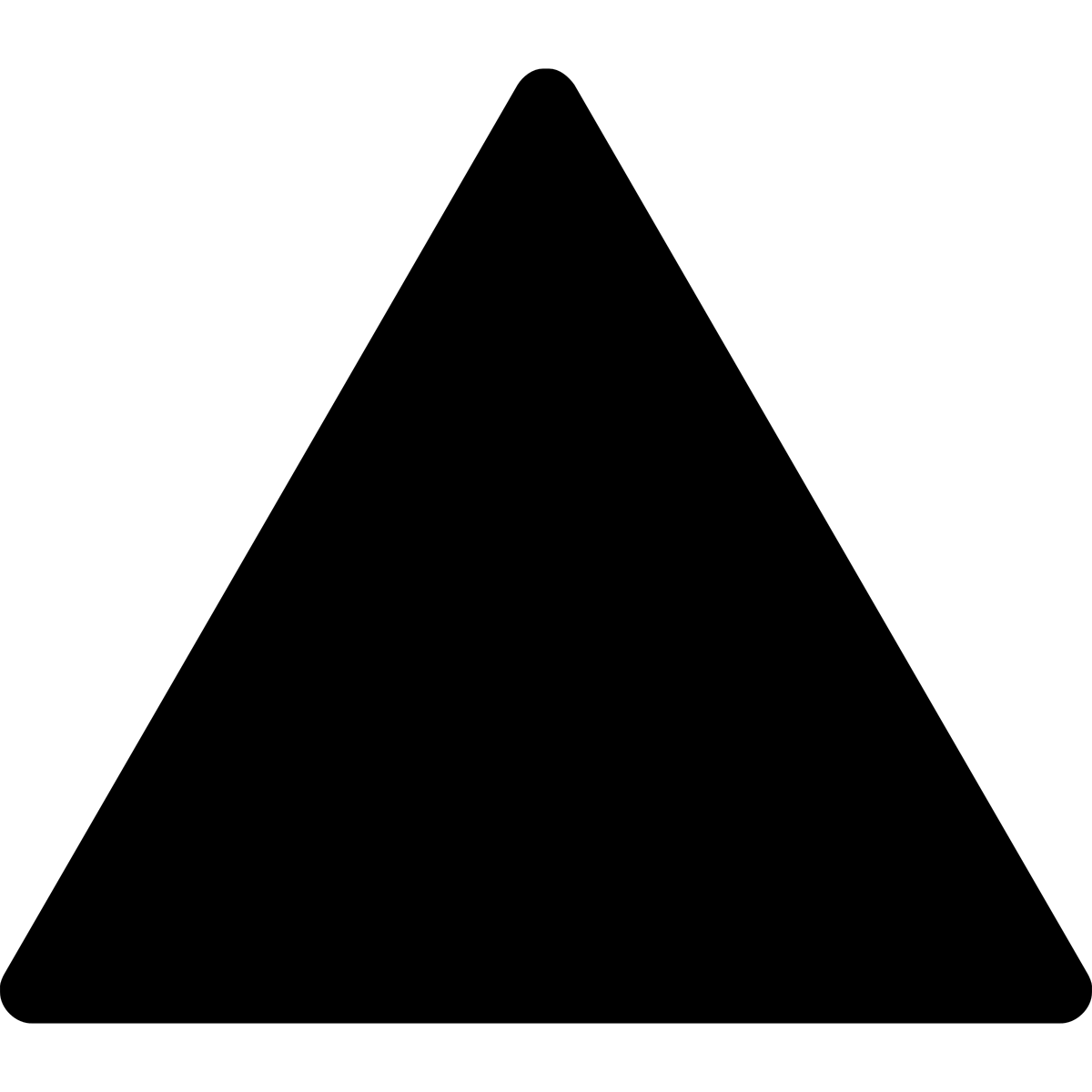
Railway crossing sign 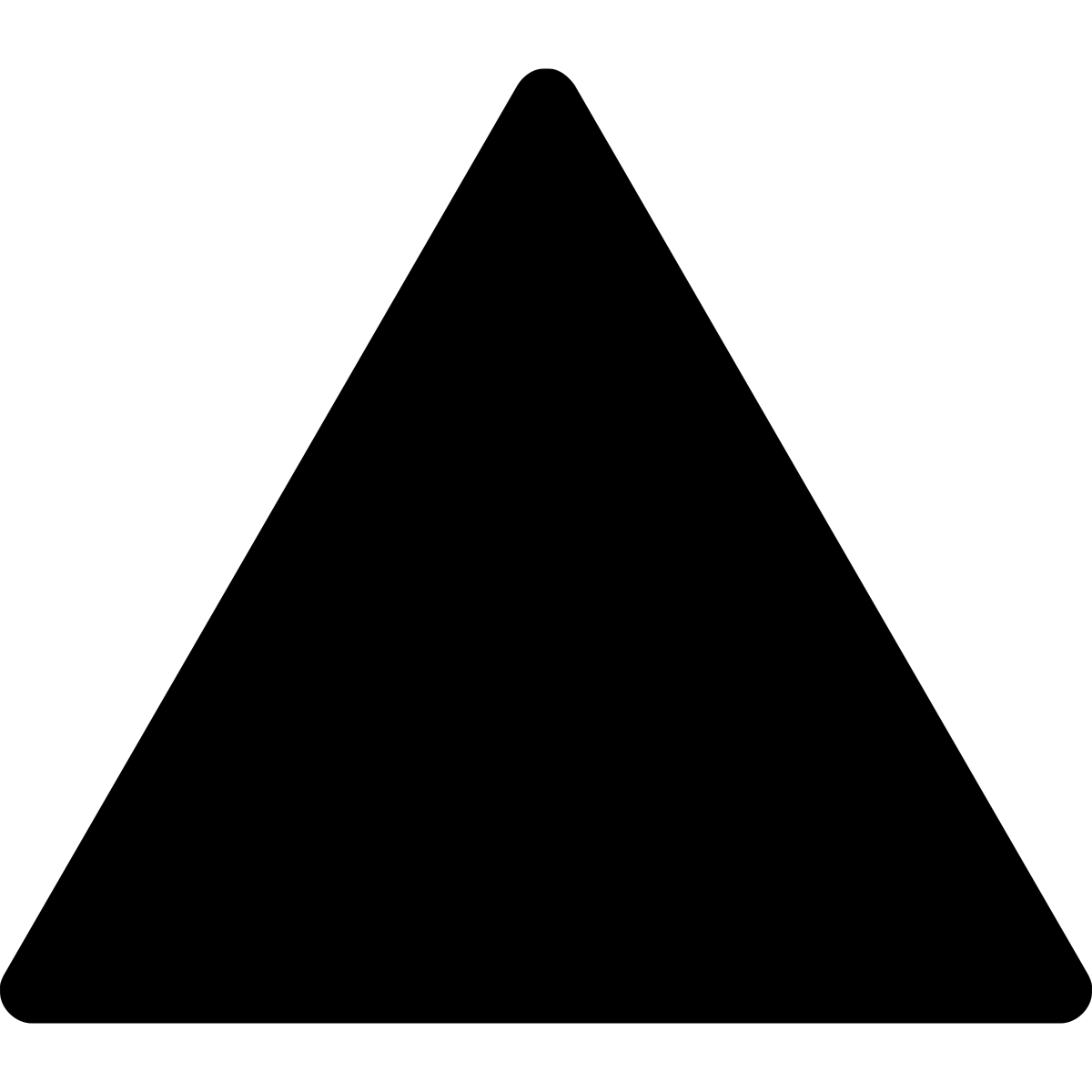
Narrow bridge sign 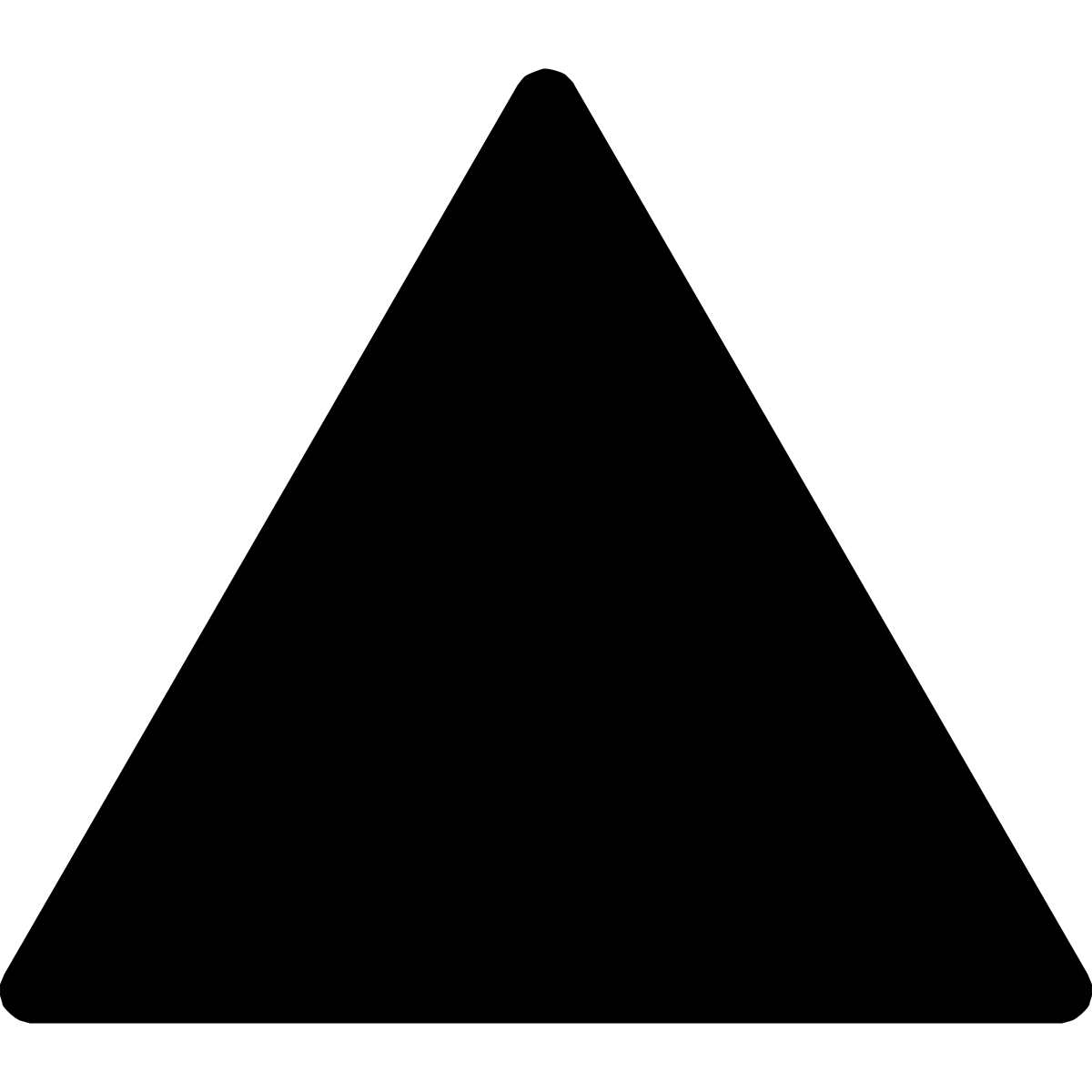
Speed humps sign 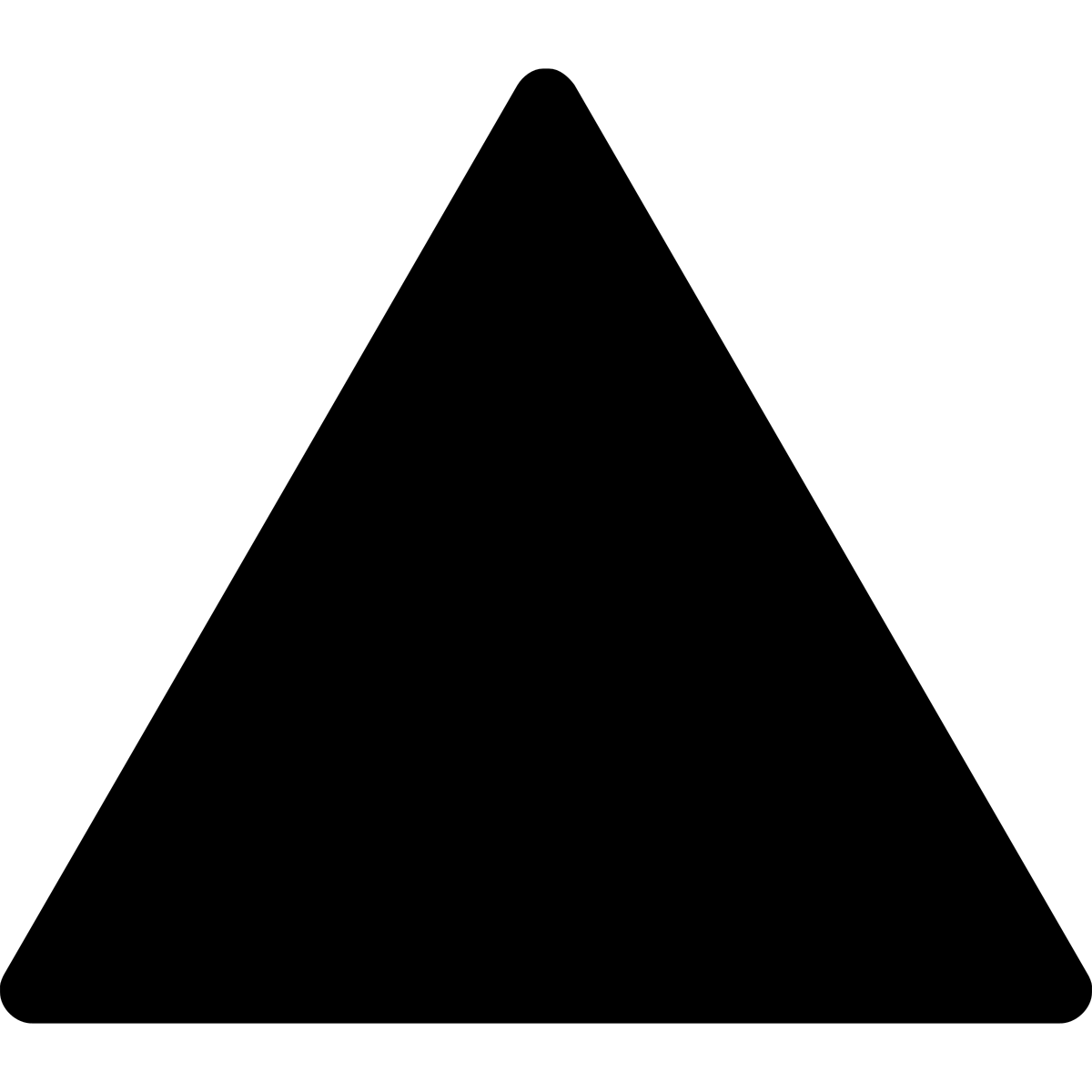
Slippery road sign 
General warning sign
Guidance and information signs
Guidance signs are an aid to the road user: where a road goes, which lane to be in, what is ahead. Information signs supply general information.
Neither group creates an obligation of its own. Regulation 285(1) of the National Road Traffic Regulations draws the line: a regulatory sign directs you to take or not take a specific action, and disregarding it is an offence, while a guidance or information sign indicates a destination, a direction, a distance or an amenity, or imparts general information and advice.
Shape. Guidance signs are ordinarily rectangular: short messages on small plates, longer ones on bigger plates. Information signs are the one group the manual gives no ordinary shape of its own.

Right of way sign 
Information centre sign 
Traffic movement affected by obstruction
Temporary signs
Temporary signs are used where the normal standards do not apply: road works, maintenance, construction, collision scenes, and temporary traffic control including school grounds and scholar patrols.
A temporary sign carries the same force as the permanent sign it stands in for. The manual's own instruction is that normal standards are not applicable and more attention must therefore be given to the specific circumstances. In plain terms: this is where you are most likely to meet something you were not expecting.
Shape. The same shape as the permanent sign, on a yellow face, with a T in front of the number. The permanent speed limit sign R201 becomes the temporary TR201.

PROCEED LEFT ONLY (temporary) 
SPEED LIMIT 60 (temporary) 
AXLE MASSLOAD LIMIT 2 t (temporary) 
NO LEFT TURN (temporary)
Road markings
Road markings regulate, control and warn by defining the limits of the carriageway and the traffic lanes and by directing traffic in a particular direction.
As with regulatory signs, it is an offence to disregard a regulatory road marking. A stop line and a yield line have their full effect even where no sign is posted: where there is no stop sign at all, the stop line on its own means what a stop sign means.

No overtaking marking 
Channelizing line marking 
Stop line marking 
Yield sign ahead marking
The group that is not on this page
The manual gives six groups, not five. The sixth is traffic signals, which regulate vehicles and pedestrians and which you are also punished for disobeying. They are not drawings on a plate, so they are taught in the course rather than shown here. Temporary signs, which have a section above, are not a group of their own in the manual: they are the same signs on a yellow face with a T in front of the number.
Where every fact on this page comes from
Each claim, its source, and how strongly we can stand behind it.
Road traffic signs are divided into six main groups: regulatory, warning, guidance, information, road markings and traffic signals, and the purpose of each.
Manual on Road Traffic Signs, Department of Transport learner manual Part 2, version 1.00, June 2012, section 1, page 2, read directly
OFFICIAL MANUAL
Regulatory signs are ordinarily round, with three named exceptions: the octagonal stop sign, the triangular yield sign and the diamond-shaped pedestrian priority signs. Warning signs are ordinarily triangular and guidance signs ordinarily rectangular.
Manual on Road Traffic Signs, Part 2, section 1, page 2, read directly
OFFICIAL MANUAL
Disregarding a regulatory sign, or a regulatory road marking, is an offence punishable by a fine or imprisonment or both.
Manual on Road Traffic Signs, Part 2, section 1, pages 2 and 3, read directly
OFFICIAL MANUAL
A regulatory sign directs a road user to take or not to take a specific action and disregarding it is an offence, while a guidance or information sign only indicates or informs.
National Road Traffic Regulations 2000, regulation 285(1), read directly
GAZETTED
A number beginning with T marks a temporary sign, on a yellow face, and temporary signs are used where the normal standards do not apply.
Manual on Road Traffic Signs, Part 2, section 1, page 3, read directly
OFFICIAL MANUAL
A stop line and a yield line carry their full effect even where no sign is posted.
Manual on Road Traffic Signs, Part 2, section 7.1, pages 49 to 50, read directly
OFFICIAL MANUAL
The drawings on this page.
Drawn for PassPath from the designs prescribed in Schedule 1 of the National Road Traffic Regulations and set out in the SA Road Traffic Signs Manual. They are our own artwork, not scans, and each one is named from the manual's own legend.
PASSPATH
How many signs are examinable, and which ones.
The list of signs the learner's test draws from is not published. The prescribed signs run to several hundred, this page shows a selection of the ones a Code 2 learner meets, and we do not claim it is the examinable set.
NOT PUBLISHED
- OFFICIAL MANUAL
- : From the Department of Transport's own learner manuals, the material the state tells you to study. We read them directly.
- GAZETTED
- : We read the government notice or regulation itself.
- PASSPATH
- : A description of our own software.
- NOT PUBLISHED
- : This is not published, so we say so instead of guessing.
Test format based on official statements as at 4 September 2026. These pages cover the K53 learner's licence test for Code 2, a light motor vehicle. PassPath is an independent study tool: it is not affiliated with, endorsed by or accredited by the RTMC, the Department of Transport, or any driving licence testing centre.